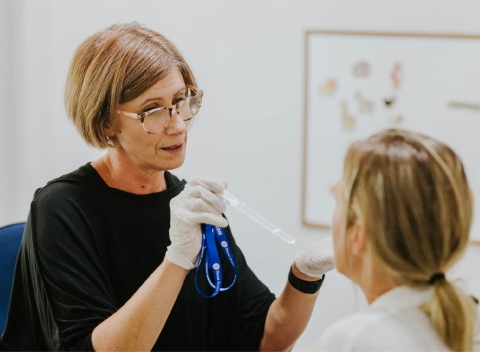
Speech pathologists study, diagnose and treat communication disorders, including difficulties with speaking, listening, understanding language, reading, writing, social skills, stuttering and using voice.
At Optiform we work with people who have difficulty communicating due to developmental delays, stroke, brain injuries, learning disability, intellectual disability, cerebral palsy, dementia and hearing loss, as well as other problems that can affect speech and language.
People who experience difficulties swallowing food and drink safely can also be helped by a speech pathologist.
Our health services include:
At Optiform, our clinicians are trained and experienced in working with adults with a range of communication and swallowing disorders following a stroke, acquired brain injury, various surgeries and progressive neurological conditions such as Parkinson’s disease, dementia, Motor Neurone Disease and Multiple Sclerosis.
Individuals will be provided with an evidence-based therapeutic approach that focuses on the functional impairment present and offers strategies and techniques to target the area of concern.
You do not need a referral to access our services, you can simply submit an enquiry. However, it is helpful to have a referral and past medical history from your GP or specialist.
Speech Pathology Australia produced the Communication Milestones Kit to provide information for parents and carers about the role of speech pathologists. The kit also assists parents and carers to find a speech pathologist if they are unsure about whether their child is having difficulty with his or her speech, language and communication.